TL:DR
- Beyond Simple Job Counts: Communities often evaluate digital infrastructure projects based solely on the number of permanent jobs created within the facility, which causes them to overlook the massive chain reaction of economic opportunity these developments generate.
- Immediate Economic Activation: The financial impact of a facility begins long before construction starts; early planning and design phases immediately drive demand for local services, consultants, legal teams, and hospitality sectors.
- High Value, Low Community Strain: Data centers act as central nodes that stimulate massive supply chains and professional services across the region, while bringing the added benefit of placing little to no long-term stress on local resources like schools, housing, and traffic.
- A Holistic Economic Catalyst: To fully leverage the next generation of technology investment, communities must adopt greater economic literacy to see beyond narrow employment metrics and recognize digital infrastructure as a comprehensive catalyst for regional growth.
# # #
Understanding infrastructure architecture is critical, but so is recognizing how economic value actually materializes. Much of the public conversation still evaluates digital infrastructure through narrow employment metrics, overlooking the broader chain reaction of opportunity these developments activate. To plan effectively, communities need greater economic literacy around how infrastructure investment shapes regional growth over time. This is the final article in my eight-part series exploring the convergence of industry and governance to solve the digital infrastructure build-out dilemma. You can read the previous posts in my series here, to learn more.
When communities evaluate digital infrastructure projects, the conversation often centers on a single question: How many permanent jobs will this facility create?
It is an understandable question. Local leaders are accountable for economic development outcomes, and employment metrics are familiar, tangible indicators of value. But when digital infrastructure is assessed primarily through job-count comparisons, an enormous portion of its economic impact can be overlooked.
Because the economic story begins long before a facility is built.
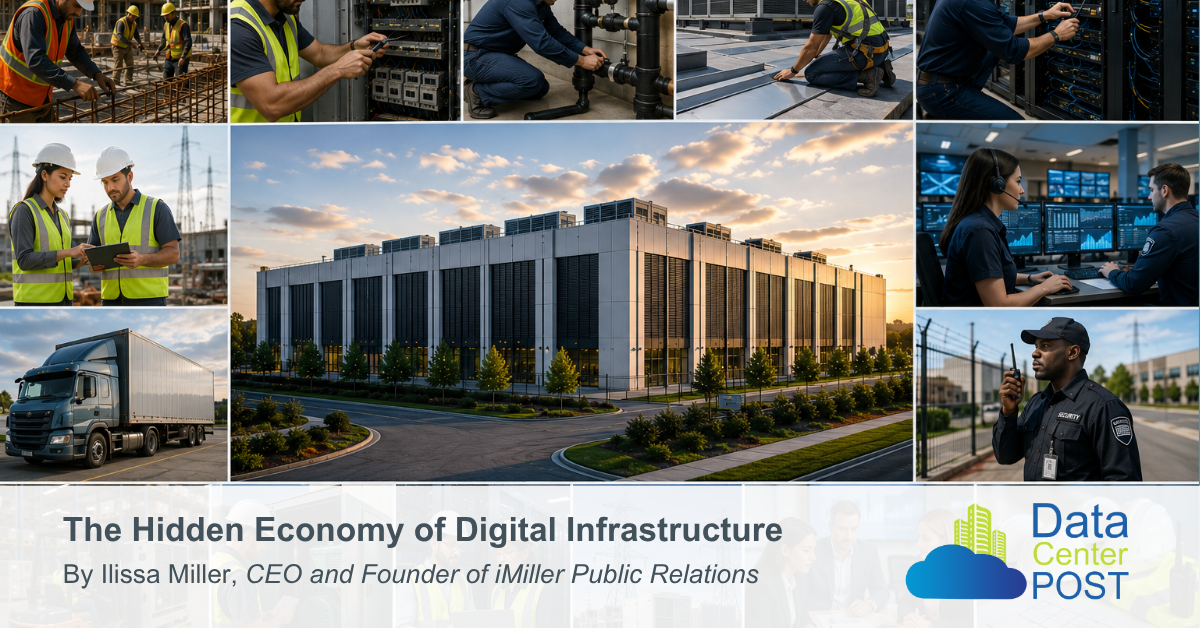
Economic activity begins the moment a digital infrastructure project is conceived. Local vendors are engaged, consultants are hired, impact studies are commissioned, and hospitality and service sectors immediately feel the benefit. A data center doesn’t just create jobs inside the facility; it activates an entire ecosystem of opportunity across industries.
From the earliest stages of planning, projects generate demand for a wide range of local services. Developers engage research firms to assess feasibility. Environmental consultants evaluate land and resource considerations. Architects and engineers begin design work. Legal teams structure transactions. Lobbyists and policy advisors navigate regulatory environments. Activists raise funds and the ecosystem designed to bring us technology becomes an interchange of dollars, even to those who don’t want them there.
Even basic logistical needs create ripple effects. Before a project even goes in front of a planning board, developers are already hiring local printers, using local hotels and restaurants, bringing in consultants, commissioning impact studies: economic activity starts the moment a project is conceived.
As development progresses, the ecosystem expands further. Skilled trades such as electricians, plumbers, construction specialists, become essential. Security providers, transportation firms, and equipment suppliers play critical roles. Connectivity providers, chip supply chains, and energy innovation partners contribute to the broader infrastructure landscape.
Yet many traditional impact assessments remain narrowly focused. Impact studies are often too narrow. They focus on permanent jobs, maybe 100 or 150 roles for a large data center, but during construction there can be thousands, and even that still misses the broader economic activity.
This gap between perceived and actual impact can shape public sentiment. When residents see a large facility but hear relatively modest employment figures, questions naturally arise about whether development aligns with community priorities.
And remember, the inverse is also happening. The stress on schools, housing, traffic for a long-haul large-scale development is low to no impact locally. When structured effectively, these large facilities provide incredible economic benefits to communities without the long-term strain on resources.
What is often less visible is the multiplier effect. People look only at the building, they don’t understand that digital infrastructure development builds entire local economies.
A data centers function as a node within a complex network of industries. A data center sits at the center of an entire ecosystem where computer chips, networks, professional services sit. Expanding off of that there are many more layers of economic opportunity. These economic opportunities span the country or world.
For example, consider that professional services firms expand. Hospitality businesses experience increased demand. New suppliers enter regional markets. Workforce development programs evolve. Adjacent technology investments may follow. Think of all of the consultants, lawyers, lobbyists, and the associations that benefit from these businesses. The direct, indirect and tertiary benefits of these large scale deployments can reach well beyond a community’s immediate needs for local jobs.
Understanding this broader economic landscape is increasingly important as communities navigate infrastructure decisions in a rapidly digitizing world. Evaluating projects through holistic economic literacy, rather than isolated metrics , can help align development outcomes with long-term strategic goals.
This is one of the central objectives of iMPR’s proprietary Groundswell™ engagement approach.
By helping communities identify where value is created across the full lifecycle of infrastructure development, stakeholders can move beyond transactional debates toward more informed planning conversations. The focus shifts from whether development creates jobs in a single facility to how it contributes to regional competitiveness, business attraction, and ecosystem growth.
Digital infrastructure is not simply a building. It is an economic catalyst.
Communities that understand this dynamic are better positioned to participate in the opportunities emerging from the next generation of technology investment.
Those that do not may underestimate the scale, and timing, of its impact.
Learn more about what we are doing at iMiller Public Relations to bridge the gap between industry and community for the digital infrastructure sector, go to www.imillerpr.com.
For information about the OIX DIFC, visit www.oix.org/standards-and-certifications/oix-dif-standard.