Originally posted on CD-Modular.
TL;DR
- The AI Construction Bottleneck: Traditional, labor-intensive data center construction models are sometimes too slow to support the rapid scale and precision required by modern, purpose-built AI deployments.
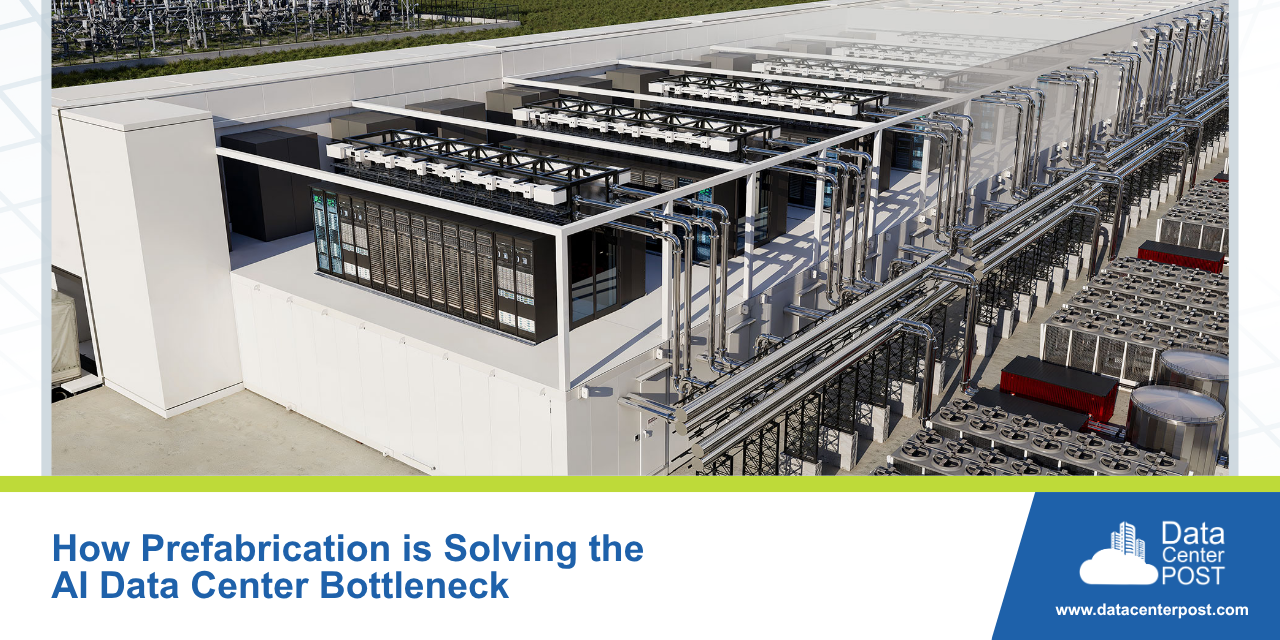
- Full-Scale Prefabrication: To accelerate timelines, the industry is moving beyond just modularizing power and cooling by prefabricating entire IT white spaces and operational areas in controlled factory settings.
- Engineered for Extreme Density: These customized, factory-built units are specifically designed to handle AI’s heavy structural demands, sophisticated liquid cooling, and extreme power requirements that exceed 4,000 watts per square foot.
- Bypassing Labor Shortages: Moving complex infrastructure assembly off-site allows operators to avoid acute industry labor shortages, transforming months of on-site construction into a competitive advantage where units are fabricated in just weeks.
# # #
The data center industry is facing a critical inflection point as traditional, labor-intensive construction models struggle to keep pace with the demands of purpose-built AI deployments. While pouring concrete and relying on large on-site workforces remains viable for standard colocation facilities, this approach creates severe bottlenecks for modern AI environments that prioritize rapid scalability, speed, and precision. To overcome these hurdles, the industry is moving beyond simply modularizing power and cooling components to prefabricating the entire IT white space and integrated operational areas.
Modern AI workloads demand heavy structural infrastructure, sophisticated liquid cooling, and dense power delivery capable of exceeding 4,000 watts per square foot. By shifting the assembly of these complex IT environments to controlled factory settings, organizations can drastically reduce their reliance on on-site labor while ensuring consistent quality and significantly faster deployment cycles. This turnkey approach allows fully customized modular units to be fabricated in a matter of weeks, offering a competitive advantage over traditional, prolonged construction timelines and actively mitigating the impacts of acute industry-wide labor shortages.
To continue reading, please click here.