TL;DR:
- Sustainable infrastructure and operational reliability are not competing priorities; true resiliency means scaling to meet future needs without depleting resources.
- Bad fuel and poor emergency logistics are leading causes of backup generator failures during grid outages.
- ESI’s Uptime IQ software uses sensor data to simulate worst-case scenarios, helping operators optimize fuel logistics, predict needs, and justify operational expenditures.
# # #
As data centers expand at breakneck speeds to support AI, cloud, and edge workloads, the industry is facing a renewed focus on community impact and environmental responsibility. Yet, amid the rush to build the facilities of tomorrow, one critical, foundational element of operational transparency is often overlooked: backup power and fuel systems.
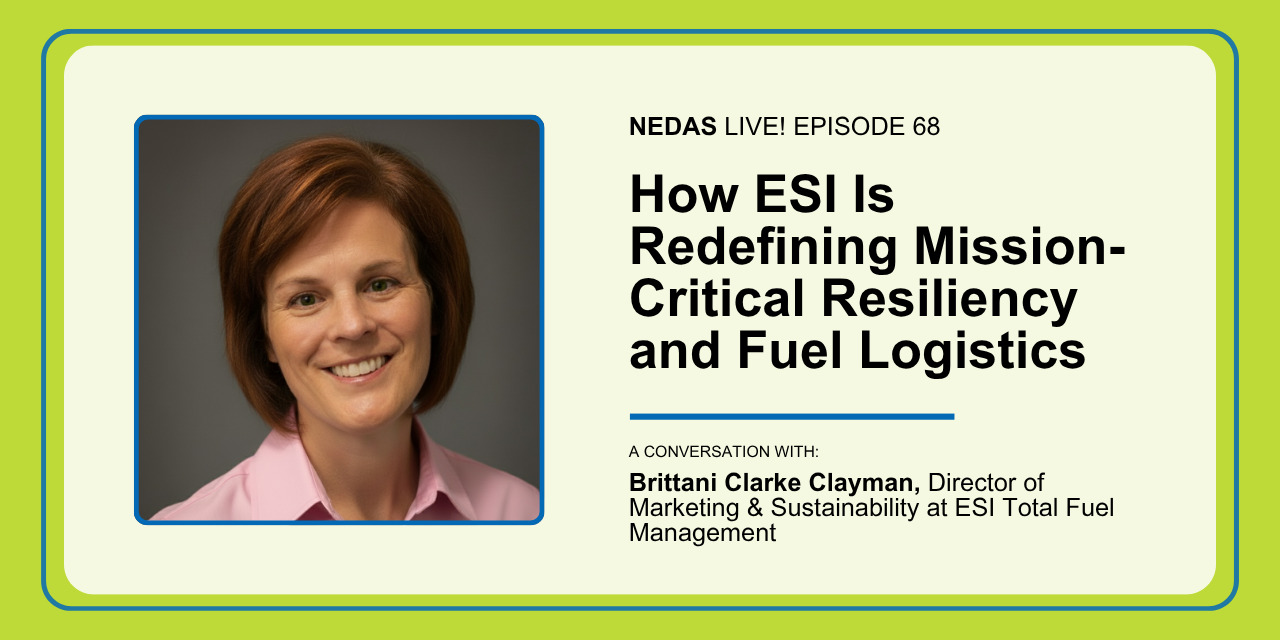
In the latest episode of NEDAS Live!, host Ilissa Miller sat down with Brittani Clarke Clayman, Director of Marketing and Sustainability at ESI Total Fuel Management, to discuss how operators can make smarter, more proactive decisions regarding their digital infrastructure deployments.
With over 30 years of experience serving the data center ecosystem, ESI takes a holistic approach to mission-critical infrastructure, proving that true reliability and sustainability are fundamentally intertwined.
Reliability and Sustainability: Two Sides of the Same Coin
A major misconception in the data center industry is that implementing sustainable solutions requires trading away reliability. ESI, which stands for Environmental Solutions International, was founded with the belief that resiliency is only truly reliable if it can endure for generations to come.
As Clayman explained, ensuring that infrastructure can scale and support future needs without depleting resources is the true definition of sustainability. Rather than competing priorities, reliability and sustainability act as two sides of the same coin, reinforcing one another to protect long-term uptime.
The Hidden Threats to Uptime: Bad Fuel and Logistics
When a grid outage occurs, operators immediately rely on their UPS systems and backup generators to maintain their service-level agreements. However, one of the leading causes of generator failure during these critical moments is bad fuel. Microbial growth or water accumulation inside fuel tanks can clog systems, preventing backup generators from starting when they are needed most.
To mitigate this risk, ESI encourages operators to utilize regular fuel polishing services and proactive testing to ensure their multi-million dollar generators will fire up at a moment’s notice.
Beyond the quality of the fuel itself, Clayman highlighted the massive logistical challenges of fuel management. Simply having fuel contracts with multiple providers is not enough. In an emergency, such as a major snowstorm, operators must know if supply routes are passable and if their facility will be prioritized over local hospitals, for instance. On top of that, managing the actual cadence of fuel trucks arriving at a site requires intense coordination to offload efficiently and safely without blocking roads for other emergency vehicles.
The HVO Revolution and Regulatory Hurdles
To meet net-zero goals, many operators are looking to transition to cleaner alternatives like Hydro-treated Vegetable Oil (HVO). Sourced from feedstocks like soybean or recycled cooking oil (and strictly avoiding palm oil to protect rainforests), HVO burns cleaner and offers a staggering 90% reduction in lifecycle greenhouse gas emissions. Notably, it also eliminates the typical diesel smell and reduces visible smoke, drastically improving environmental goals.
Even better, HVO can actually increase engine performance and resiliency due to its higher energy power.
However, regulatory frameworks have not caught up to digital infrastructure needs. Currently, the EPA’s renewable fuel standard considers the use of HVO in backup generators a “non-compliant use,” effectively penalizing data centers with credit fees for attempting to use a greener fuel. While exceptions exist for marine transportation, ESI is actively working with federal policy influencers to secure similar exceptions for the data center industry.
Data-Driven Resiliency: Uptime IQ™
To further optimize fuel operations, ESI developed a software program called Uptime IQ. This platform uses sensors to capture crucial data points, such as fuel temperature, volume expansion, and generator load speeds, to help operators fully understand their assets.
Uptime IQ allows operators to simulate worst-case scenarios, such as predicting exactly how much fuel is required and how many trucks must arrive per hour to maintain 96 hours of uptime during a simulated hurricane. This data not only secures operational resiliency but also equips facility managers with the concrete evidence needed to justify OpEx spending to higher-ups.
Plan for the Worst Case Scenario
As the industry scales, Clayman’s ultimate advice to operators is to proactively plan for the worst, even going so far as to imagine a “sharknado” hitting their facility. By securing a specialized partner to map out contingency plans before disaster strikes, operators can relax knowing their backup systems are ready, allowing them to focus on running the core of their business.
To continue the conversation, listen to Episode 68 of the NEDAS Live! podcast here.