TL;DR
- AI is reshaping data center operations, driving higher rack densities, increased power requirements, and a greater demand for liquid-to-chip cooling expertise.
- Resilience depends on more than redundant infrastructure, requiring proven processes, real-time monitoring, strong documentation, reliable partners, and well-trained operational teams.
- Datalec Precision Installations (DPI) is helping customers navigate these challenges across the full data center lifecycle, from deployment and fit-outs to maintenance and specialized cooling support
# # #
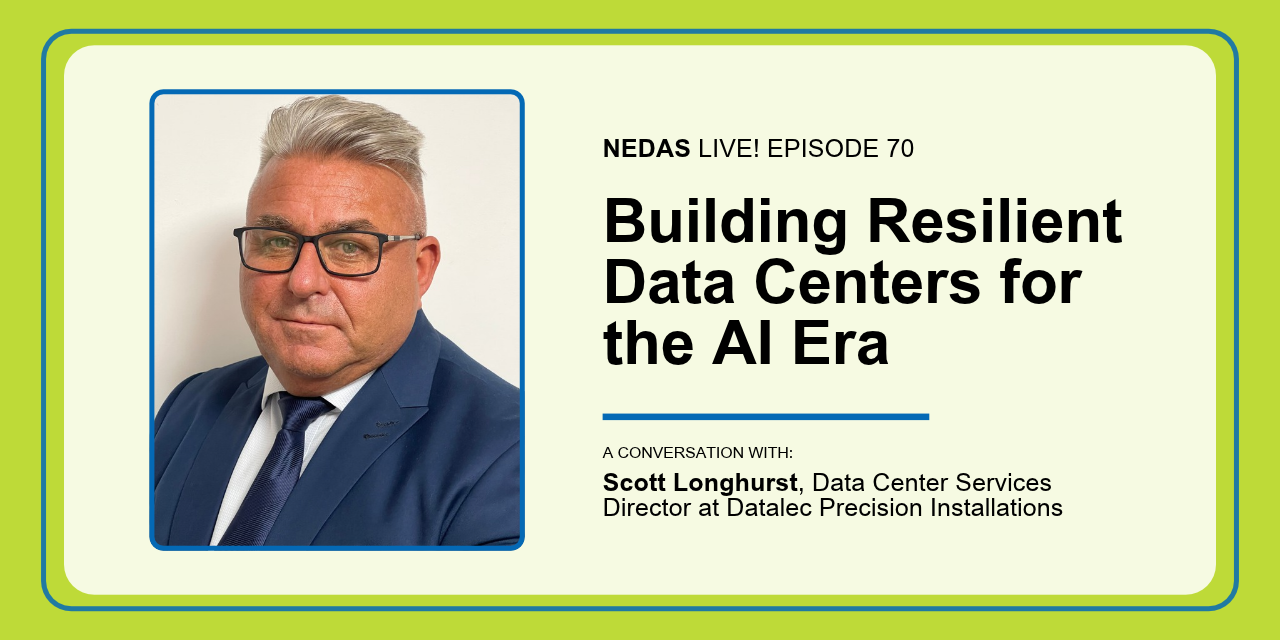
In episode 70 of NEDAS Live!, host Ilissa Miller sat down with Scott Longhurst, Data Center Services Director at Datalec Precision Installations (DPI), to discuss the evolving operational demands of AI-ready data centers. Drawing on more than 35 years in mission-critical environments, Longhurst explores what resilience truly means as facilities become more dense, power-intensive, and complex.
For Longhurst, resilience extends far beyond redundancy. It requires proven processes, strong documentation, effective monitoring, dependable supply chains, and well-trained teams that can respond intelligently as infrastructure and customer requirements change. However, the industry faces a growing workforce challenge as data centers are being built faster than skilled operations professionals can be trained.
Artificial intelligence is accelerating the shift toward higher-density deployments and liquid-to-chip cooling. Longhurst notes that rack requirements are rising quickly, putting new pressure on facility power, cooling, structural capacity, maintenance practices, and deployment timelines. Liquid cooling also introduces a new operational boundary between landlord-managed and customer-managed systems, making coordinated monitoring and clear accountability essential.
Proactive maintenance was another key focus of the conversation. Longhurst explains how a maintenance program should not simply follow a calendar. Operators need to use predictive monitoring, equipment trend data, lifecycle planning, and root-cause analysis to identify and address issues before they disrupt service. The approach he outlines can reduce risk, support customer commitments, and guide smarter investment in aging infrastructure.
The two also discussed the industry’s continued focus on efficiency. Higher allowable operating temperatures, more efficient UPS systems, variable-speed equipment, and updated cooling strategies are helping operators lower energy use while maintaining reliable performance. For DPI, the opportunity lies in supporting customers across the data center lifecycle, from fit-outs and modular deployments to commissioning, maintenance, and specialized AI cooling services.
Tune in to episode 71 of NEDAS Live! for the full discussion on how resilient operations, skilled teams, and proactive maintenance strategies will shape the data centers powering the AI era.