TL;DR
- Community-driven collaboration can deliver more sustainable infrastructure solutions.
- Local knowledge is essential when addressing complex infrastructure challenges.
- Scalable models can improve public health and quality of life in underserved communities.
- Successful infrastructure projects balance engineering expertise with community engagement.
# # #
Written by iMiller Public Relations on behalf of Nomad Futurist.
Community collaboration helps create lasting solutions.
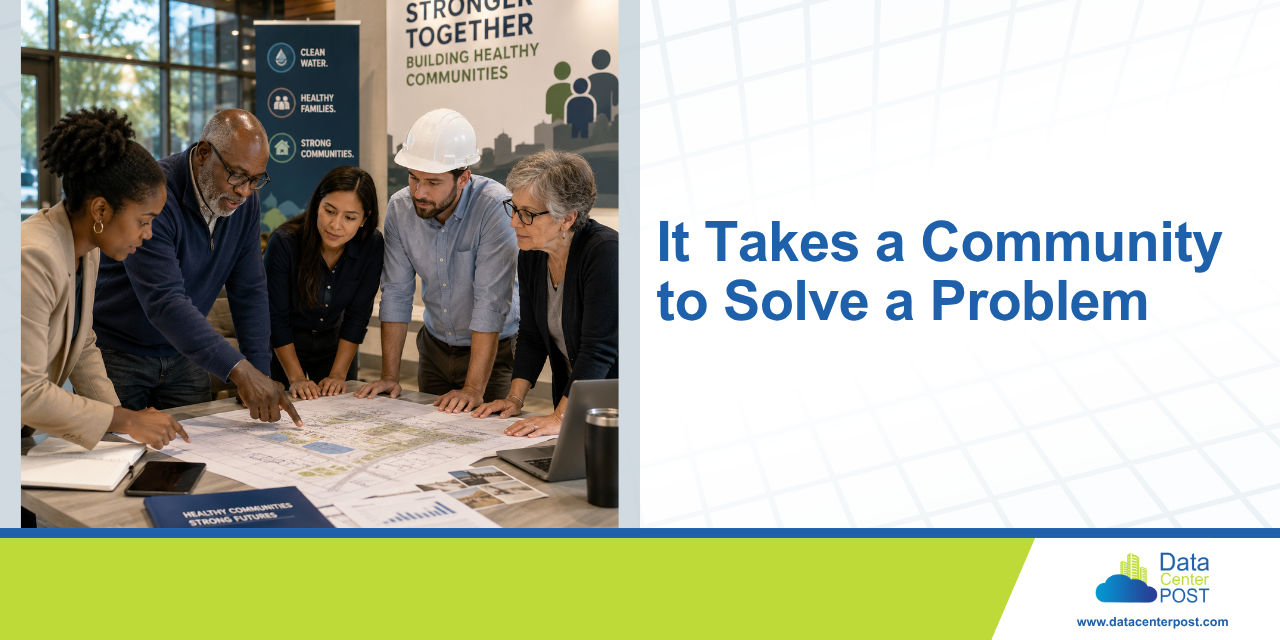
Infrastructure challenges are often viewed as technical problems, but lasting solutions require community involvement. In the latest Nomad Futurist article, Student Advocate Prathyaj Mantha highlights how Alabama’s Black Belt Unincorporated Wastewater Program (BBUWP) is transforming rural sanitation through collaboration among residents, engineers, environmental health professionals, and government partners.
Rather than applying one-size-fits-all solutions, the program addresses local challenges with community-driven planning and tailored infrastructure. The result is a scalable model that improves public health while demonstrating how collaboration can create sustainable, long-term impact for underserved communities.
This content originally appeared on the Nomad Futurist website and has been adapted for syndication on Data Center POST. Read the complete blog here.