Originally posted on Mod42.
TL;DR
- Modular is a manufacturing methodology, not a shipping container.
- Mod42 manufactures complete data center buildings off-site using volumetric modular construction.
- Factory-built modules enable parallel construction, reducing deployment timelines by up to 50%.
- Purpose-built modular facilities deliver the same performance, quality, and serviceability as traditional data centers.
- The modular approach provides greater flexibility to adapt to evolving AI workloads, cooling technologies, and power requirements.
- Mod42 helps organizations deploy AI infrastructure faster while maintaining long-term scalability and future readiness.
# # #
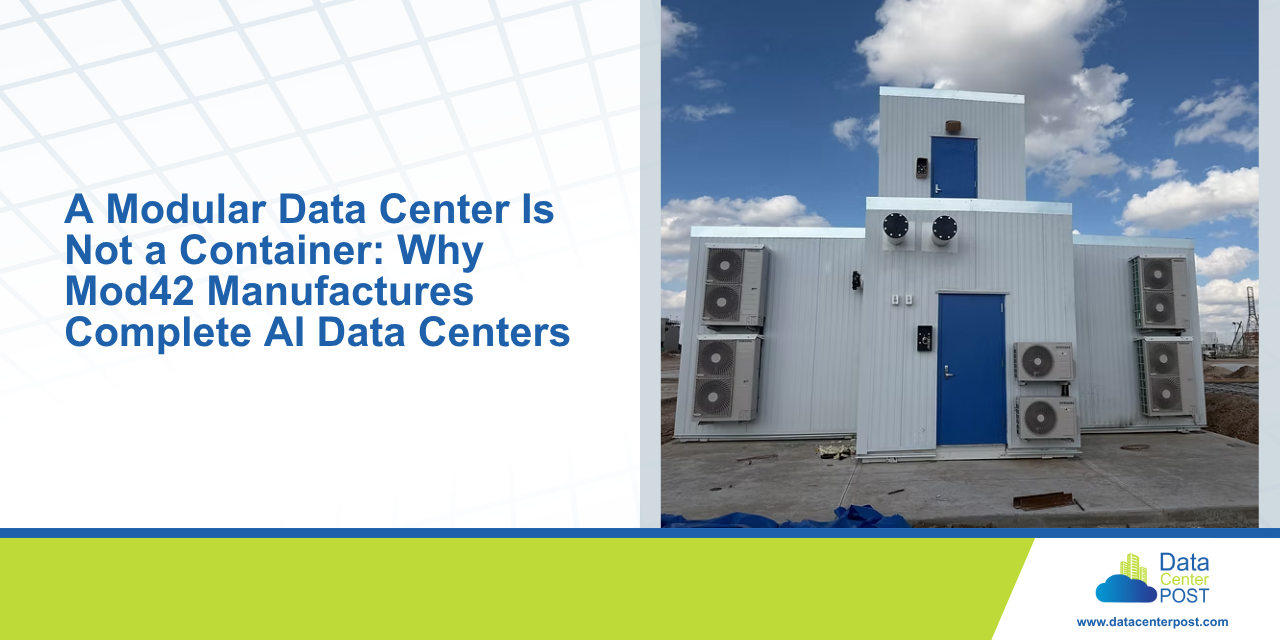
A common misconception in the digital infrastructure industry is equating modular data centers with shipping containers filled with servers. In reality, modular construction is a manufacturing methodology that shifts work into a controlled factory environment to reduce risk and accelerate schedules. Moving beyond simple containerized solutions, Mod42 utilizes volumetric modular construction to manufacture entire building sections off-site. These purpose-built modules incorporate the exact same structural, electrical, mechanical, and cooling systems found in traditional facilities, resulting in a fully operational, enterprise-grade data center rather than a temporary deployment.
The rapid deployment speed of this methodology comes from parallel manufacturing rather than the physical shape of a container. While site preparations, foundations, and utilities are being completed on location, the actual data center is built simultaneously in the factory. By overlapping these critical phases instead of executing them sequentially, organizations can bypass traditional construction bottlenecks and bring complete, factory-built AI capacity online in under seven months.
Beyond speed, this volumetric approach provides the critical adaptability required by rapidly evolving artificial intelligence workloads. Because these facilities are engineered as actual buildings rather than restricted transportation packages, they offer the necessary flexibility to accommodate soaring rack densities, changing cooling strategies, and future hardware upgrades. This ensures that operators can efficiently scale their operations, easily add modules as demand grows, and future-proof their long-term infrastructure investments.
To continue reading, please click here.