TL;DR
- AI workloads are rendering standard real estate playbooks obsolete, forcing data centers to be built and operated like high-density industrial plants.
- Evaluating facilities solely on initial speed, capacity, and cost-per-watt overlooks a decades-long lifecycle that must adapt to rapidly shifting GPU platforms, rack densities, and cooling needs.
- Synchronizing design, factory fabrication, testing, and site preparation in parallel reduces expensive field modifications and bridges traditional silos.
# # #
Written by iMiller Public Relations on behalf of Compu Dynamics Modular.
Modern data centers must be designed and evaluated as ongoing industrial systems rather than static real estate assets evaluated solely on day-one metrics like speed, megawatts, and initial cost per watt. Driven by the intense demands of AI workloads, the industry is shifting away from traditional commercial office playbooks to build facilities that function more like high-density industrial plants. This transition requires end-to-end planning that spans every stage from initial design, offsite factory integration, and site preparation, through decades of daily operations and future technology refreshes.
A critical challenge in modern facility planning is bridging the gap between physical infrastructure, which operates for decades, and compute technology, which evolves at a breakneck pace. As GPU platforms advance, rack densities, power needs, and cooling architectures rapidly shift, requiring infrastructure that can adapt incrementally without disrupting live workloads or requiring major reconstruction. Implementing a proactive five-to-10-year lifecycle strategy allows operators to gracefully integrate technologies like liquid cooling and scale electrical distribution capacity as workloads compress.
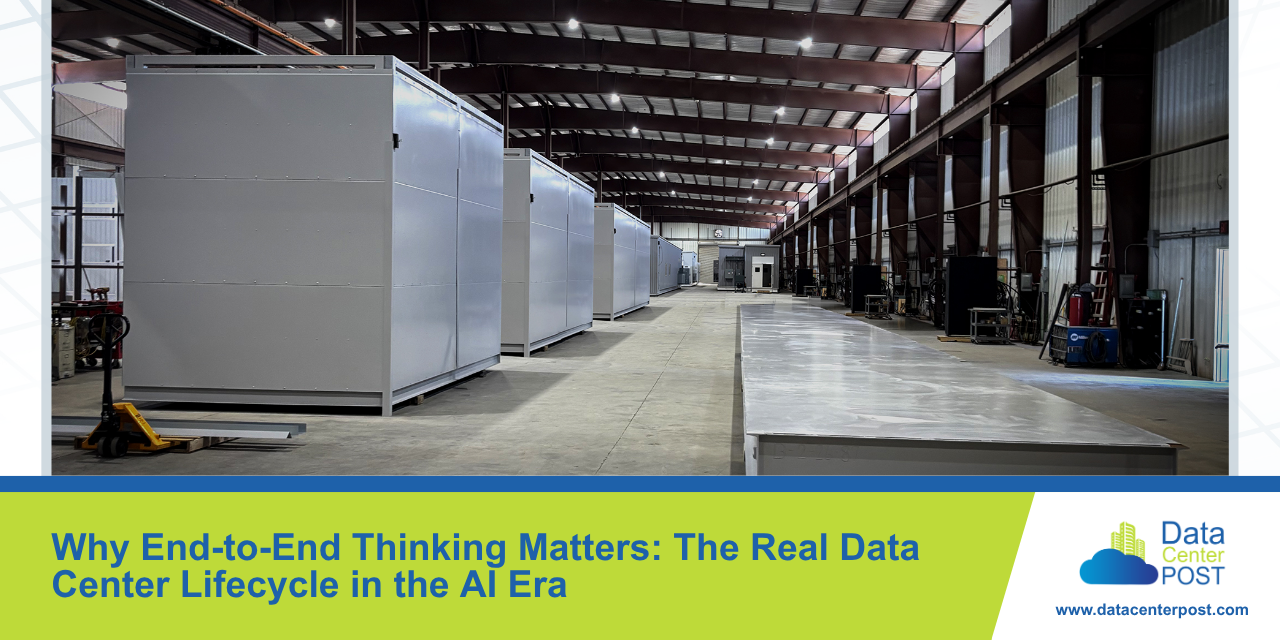
Achieving this adaptability requires breaking down traditional silos between engineering, offsite manufacturing, and on-site construction to prevent expensive coordination issues in the field. Utilizing modular delivery fundamentally restructures the execution model by coordinating design, assembly, and testing in a controlled factory environment while site preparation happens in parallel. Ultimately, this end-to-end coordination ensures a predictable, repeatable deployment process and establishes a foundation for seamless upgrades throughout the facility’s longest lifecycle phase: operations.
This content originally appeared on Compu Dynamics Modular’s website and has been adapted for syndication on Data Center POST. Read the complete article here.